
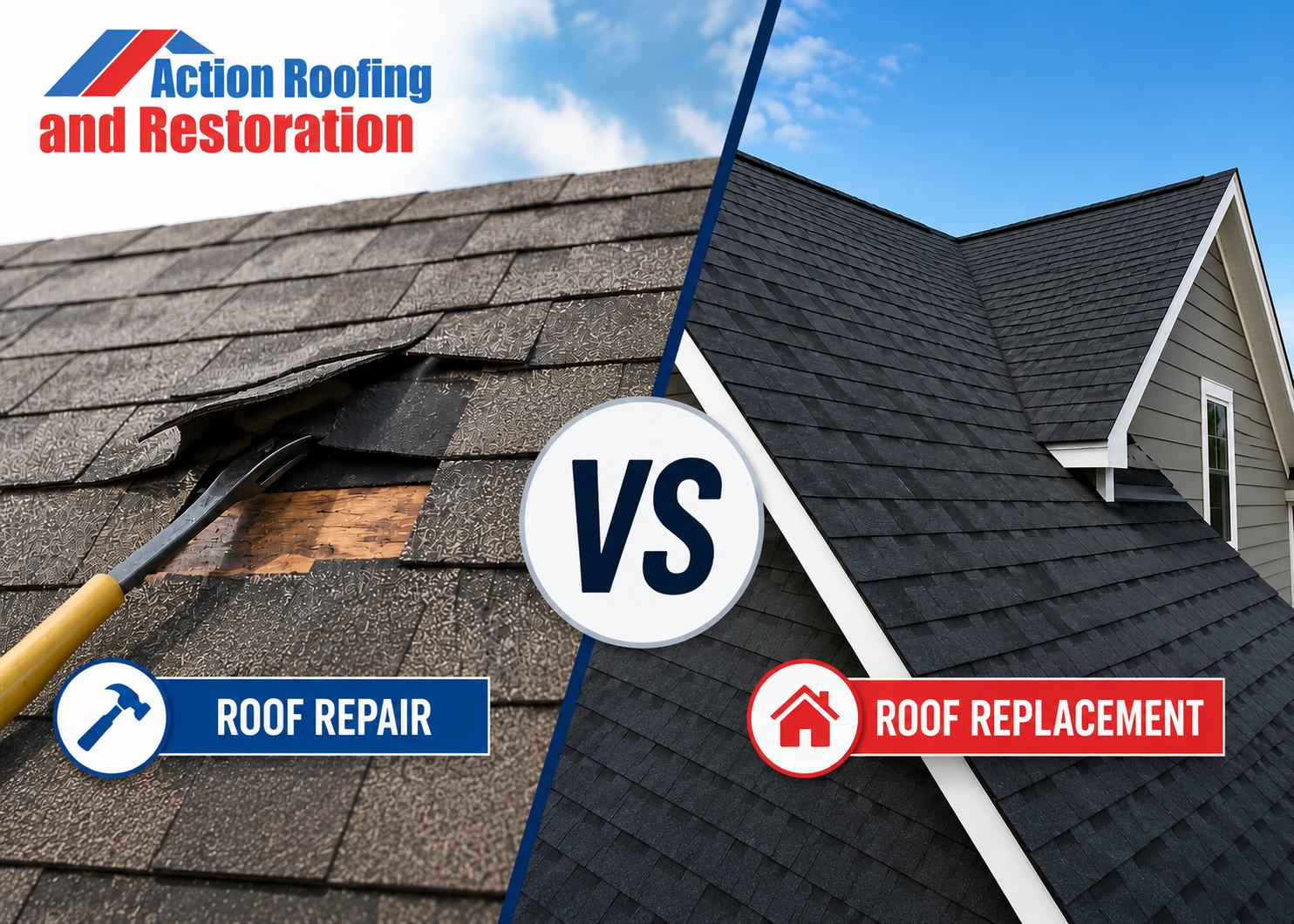
Your roof protects your home from rain, heat, wind, and outside damage every single day. But when problems start showing up—like leaks, missing shingles, or storm damage, many homeowners ask the same question: Should I repair the roof or replace it completely?
The answer is not always simple.
In some situations, a quick roof repair can save you thousands of dollars. In other cases, spending money on repeated repairs can become more expensive than replacing the roof altogether.
So, how do you know which option saves more money?
In this guide, we’ll explain the difference between roof repair and roof replacement, compare costs, and help you decide which option makes the most financial sense for your home.
What Is Roof Repair?
Roof repair means fixing specific damaged areas instead of replacing the entire roofing system. This option works best when the damage is small or limited to one section of the roof.
Common roof repairs include:
- Fixing roof leaks
- Replacing missing or broken shingles
- Repairing flashing around chimneys or vents
- Fixing minor storm damage
- Sealing small cracks or holes
- Repairing water damage in a limited area
Roof repair focuses only on the damaged section while keeping the rest of the roof intact.
When Roof Repair Makes Sense
Roof repair is usually the better option if:
- Your roof is relatively new
- Damage is minor or localized
- The roof structure is still strong
- You have only a few missing shingles
- The leak is small and easy to fix
- The damage happened from a recent storm
For example, if strong wind removes a few shingles or a small leak appears after heavy rain, repairing the roof may solve the problem without spending a large amount of money.
What Is Roof Replacement?
Roof replacement means removing most or all of the existing roofing material and installing a completely new roof. This option is often recommended when the roof is old, badly damaged, or near the end of its lifespan.
A roof replacement may include:
- Removing old shingles or roofing material
- Inspecting the roof deck
- Replacing damaged underlayment
- Installing new roofing materials
- Improving ventilation and waterproofing
Although roof replacement costs more upfront, it can provide long-term savings in many situations.
When Roof Replacement Makes Sense
Replacing the roof is often the smarter choice if:
- Your roof is over 20 years old
- Damage covers a large area
- You have multiple leaks
- Repairs are becoming frequent
- There is mold, rot, or structural damage
- Storm damage is severe
If your roof constantly needs repairs, replacement may actually cost less over time.
Roof Repair vs Roof Replacement: Cost Comparison
For many homeowners, cost is the biggest deciding factor. At first glance, roof repair seems cheaper because the upfront expense is lower.
Roof Repair Costs
Minor roof repairs are usually more affordable.
Common repair costs may include:
- Small leak repair
- Replacing damaged shingles
- Flashing repairs
- Minor storm damage fixes
However, the total cost depends on:
- Type of roofing material
- Size of the damaged area
- Labor costs in your area
- Severity of the damage
The biggest problem with repairs is that repeated fixes can quickly add up.
Imagine paying for roof repairs every year. After several years, you may end up spending almost the same amount as a full replacement.
Roof Replacement Costs
Roof replacement costs more because it involves labor, materials, removal of old roofing, and installation.
Factors affecting replacement costs include:
- Roof size
- Roofing material type
- Roof complexity
- Labor rates
- Structural repairs needed
Even though replacement costs more initially, homeowners often save money later because they avoid constant repair bills.
Which Option Saves More Money Long-Term?
The honest answer is: it depends on the condition of your roof.
Let’s look at different situations.
Scenario 1: Minor Damage on a Newer Roof
If your roof is under 10 years old and only has minor damage, roof repair usually saves more money.
Why?
Because replacing an otherwise healthy roof would be unnecessary and expensive.
For example:
A few missing shingles after strong winds can often be repaired quickly without replacing the whole roof.
Winner: Roof Repair
Scenario 2: Frequent Leaks and Recurring Problems
If you keep repairing leaks every year, replacement often becomes the cheaper option. Repeated repair bills may look affordable individually, but they slowly become expensive.
For example:
You fix one leak this year. Another leak appeared six months later. Then flashing damage appears. Soon, you may spend thousands without fully solving the issue.
Winner: Roof Replacement
Scenario 3: An Older Roof Near the End of Its Life
Every roof has a lifespan.
Common roof lifespans include:
- Asphalt shingles: around 20–30 years
- Metal roofs: around 40–70 years
- Tile roofs: 50+ years
If your roof is already near the end of its expected life, major repairs may not be worth the investment. Replacing the roof can prevent future problems and give you peace of mind.
Winner: Roof Replacement
Scenario 4: Severe Storm Damage
Storms can cause serious roofing issues. Heavy wind, hail, or fallen tree branches can damage large sections of a roof. If the damage is small, repair may be enough.
But if structural damage exists or multiple sections are affected, replacement may save more money and reduce future risks.
Winner: Depends on Damage Severity
Signs You Only Need Roof Repair
Here are some signs that repair may be enough:
Small or Isolated Leak
A leak in one area often means the problem is limited. Quick repairs may stop the issue before it spreads.
A Few Missing Shingles
Missing shingles after wind damage are often repairable. Replacing a few shingles costs much less than a full replacement.
Minor Flashing Damage
Flashing around chimneys, skylights, and vents sometimes loosens or cracks. This issue can usually be fixed without replacing the whole roof.
Roof Is Still Relatively Young
If your roof still has many years left, repairs often make more financial sense.
Signs You Should Replace Your Roof
Some warning signs mean replacement may save more money over time.
Multiple Leaks
Several leaks in different areas often suggest larger roofing problems. Temporary repairs may only delay the inevitable.
Sagging Roof
A sagging roof may signal structural damage underneath. This issue usually requires major work.
Water Damage or Mold
Moisture problems inside the attic or ceiling may indicate hidden roof failure. Ignoring these issues can lead to expensive interior damage.
Curled or Missing Shingles Everywhere
If shingles are damaged across large sections, repair may not be practical.
Roof Age
Older roofs naturally wear down over time. Replacing an aging roof can help avoid emergency repair costs later.
Hidden Costs Homeowners Often Ignore
Many people only think about the immediate price. But there are hidden costs too.
Higher Energy Bills
Old roofs may have poor insulation and ventilation. A new roof can improve energy efficiency and lower heating or cooling costs.
Interior Water Damage
A leaking roof can damage:
- Ceilings
- Walls
- Flooring
- Furniture
- Electrical systems
Waiting too long can turn a small roofing problem into a costly home repair project.
Lower Home Value
A damaged roof can reduce curb appeal and property value. If you plan to sell your home, a newer roof can attract buyers and increase confidence.
How to Decide Between Roof Repair and Roof Replacement
Ask yourself these questions:
How Old Is the Roof?
An older roof may not be worth repeated repairs.
How Serious Is the Damage?
Small issues usually need repairs. Large damage may justify replacement.
Are Repairs Becoming Frequent?
If roofing problems keep returning, replacement may save money long-term.
What Is Your Budget?
Repairs are cheaper upfront. Replacement costs more now but may reduce future expenses.
Are You Planning to Stay in the Home?
If you plan to stay for many years, replacement can be a smart long-term investment.
Should You Get a Professional Roof Inspection?
Yes.
Sometimes roofing damage looks minor from outside but is much worse underneath.
A professional inspection helps determine:
- The true condition of the roof
- Whether repairs are enough
- If replacement is the smarter investment
- Potential hidden damage
A trusted roofing contractor can help you understand the actual condition of your roof before you spend money.
Final Words
So, which saves more money: roof repair or roof replacement?
The answer depends on your roof’s age, condition, and the type of damage.
If the problem is small and your roof is still in good shape, roof repair usually saves more money.
But if your roof is older, constantly leaking, or badly damaged, roof replacement often becomes the better long-term investment.
The key is not waiting too long. Small roofing problems can become expensive if ignored.
Before making a decision, it’s always smart to have your roof professionally inspected so you can choose the option that protects both your home and your budget.