
Colorado’s Front Range sits in what meteorologists sometimes call “Hail Alley,” and if you’ve lived through even one Colorado summer, you already know why. A storm can roll through in twenty minutes, and by the time it’s over, your roof might be carrying damage you won’t notice for months until a leak shows up during the next snowmelt. Learning the real hail damage roof signs early can save you from a much bigger repair bill down the road, and honestly, from a lot of unnecessary stress.
Let’s walk through what to actually look for, because most homeowners have no idea what hail damage looks like until someone points it out.
Why Colorado Homeowners Deal With This More Than Most
Colorado consistently ranks among the top states for hail frequency and severity in the US, with certain corridors often referred to as “Hail Alley,” stretching through parts of Colorado, Nebraska, and Wyoming seeing multiple significant hailstorms per year (exact frequency figures vary by source and year, so it’s worth checking current NOAA or insurance industry data if you want precise numbers). Denver, Colorado Springs, and surrounding metro areas have all seen storms in recent years that caused widespread roofing damage across entire neighborhoods.
A homeowner in Colorado Springs mentioned that after a particularly intense hailstorm one summer, nearly every house on her street had a roofing contractor’s truck parked outside within the same month. That’s not an isolated pattern Colorado’s roofing industry genuinely scales up seasonally around hail events.
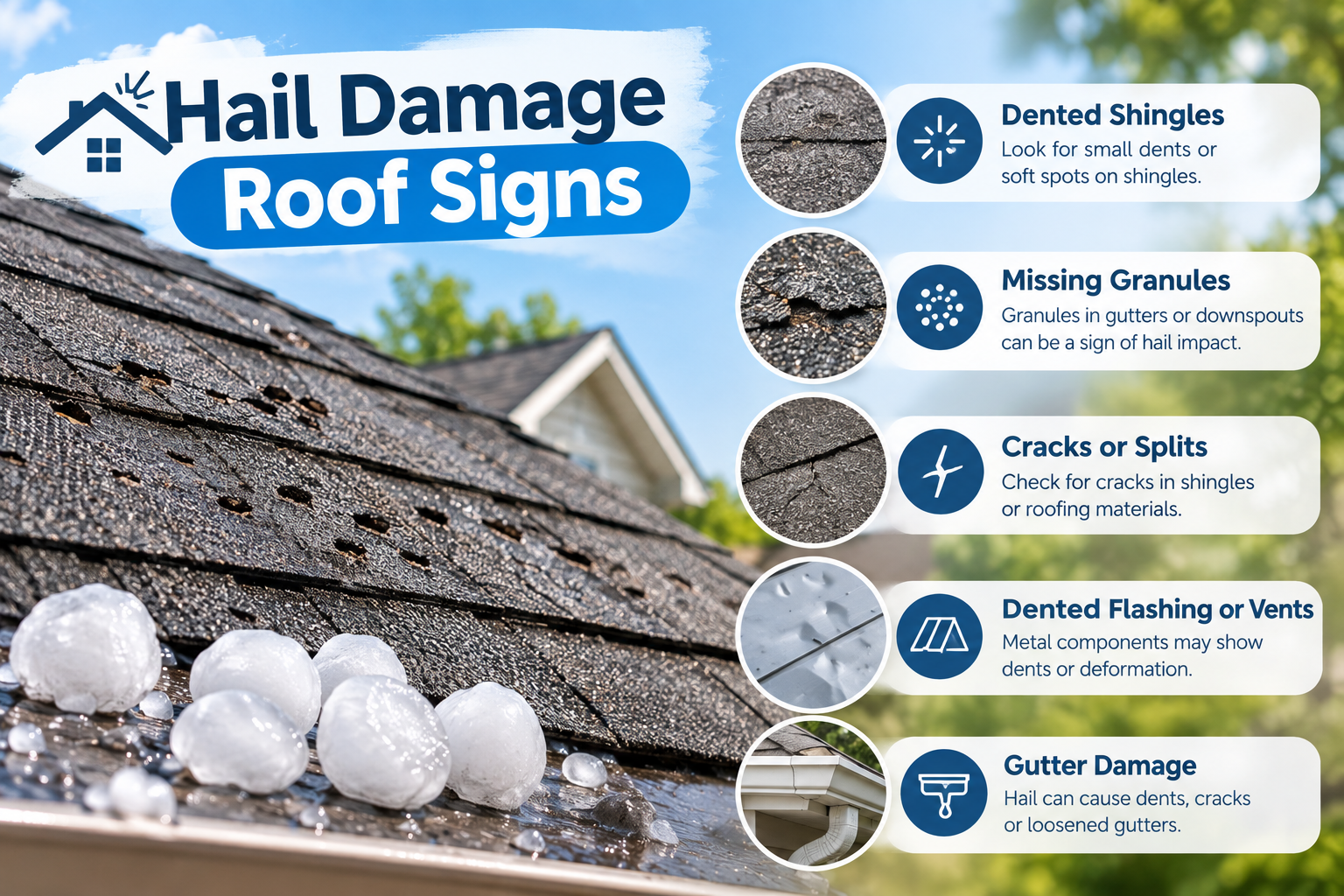
Dented or Bruised Shingles
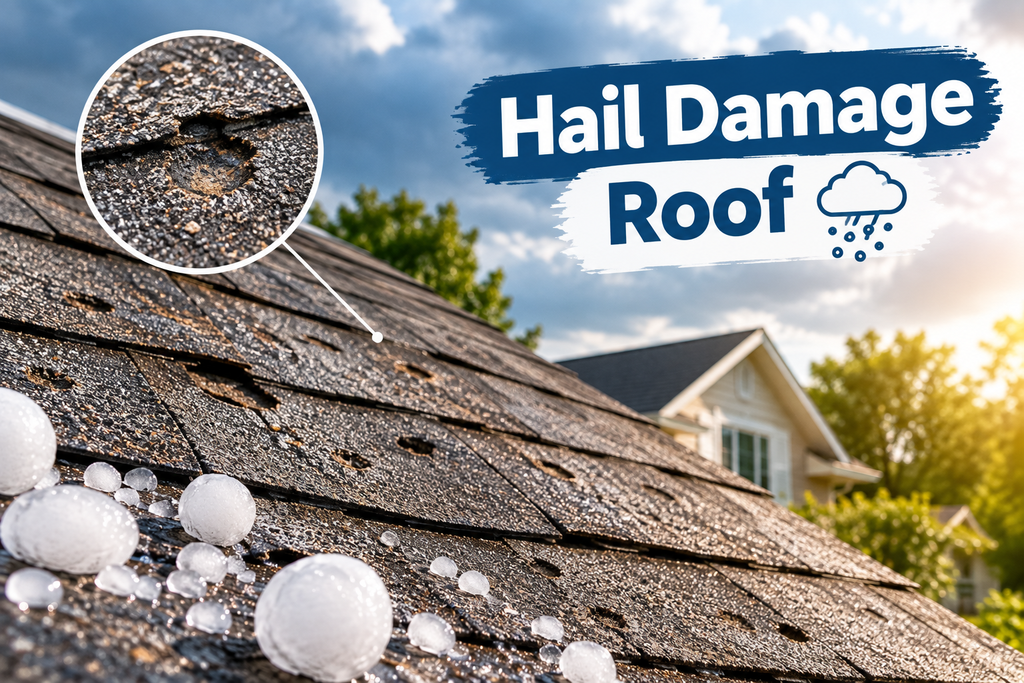
This is the most common and most often missed sign of hail damage. Asphalt shingles can develop small, circular bruises where hail impacts knocked granules loose or compressed the shingle material without causing an obvious visible hole.
A resident in Aurora had their roof inspected after a storm and initially saw nothing concerning from ground level. Once a Certified roof inspector got up on the roof, though, they found dozens of small bruises scattered across the surface damage that wasn’t visible at all without a close, professional Roof inspection.
If you’re unsure whether your roof was affected, scheduling a Residential roof inspection after any significant hailstorm is generally worth the modest cost involved.
Missing or Loose Granules in Gutters
Check your gutters and downspouts after a storm. If you notice a buildup of small, sand-like granules more than the usual light wear that’s often a sign hail knocked them loose from your shingles.
A homeowner in Fort Collins noticed unusually heavy granule buildup in their gutters following a hailstorm, prompting them to call for a Roof leak inspection before any visible leak actually appeared. The inspection confirmed hail damage significant enough to warrant a claim, caught early enough to prevent a leak from developing over the following months.
Cracked or Split Shingles
Larger hail, sometimes an inch or more in diameter, can cause visible cracks or splits in shingle material. This type of damage is usually easier to spot than granule loss, but it’s still often missed from ground level, especially on steeper roof pitches.
A family in Lakewood discovered several cracked shingles near their roof’s ridge line during a routine roof maintenance check. Left unaddressed, cracks like these tend to worsen with freeze-thaw cycles common in Colorado winters, eventually leading to leaks.
Dented Gutters, Vents, or Flashing
Sometimes the roof itself looks fine, but the surrounding metal components tell a different story. Dented gutters, damaged vent covers, or dinged flashing around chimneys and skylights are strong indicators that hail hit hard enough to affect softer materials, even if shingles show less obvious damage.
A homeowner in Boulder assumed their roof was untouched after a storm since the shingles looked fine, but noticed dented gutters and a damaged attic vent cover. That prompted a call for a Professional roof inspection, which ultimately confirmed shingle damage too damage that likely would’ve gone unnoticed for a long time otherwise.
Interior Leaks or Water Stains
This is the sign nobody wants to discover, because by the time water stains show up on your ceiling, the damage has often been sitting unaddressed for a while. If you notice discoloration, bubbling paint, or actual dripping after a storm, that’s an urgent situation requiring emergency roof repair rather than a routine inspection.
A homeowner in Pueblo noticed a small water stain on their bedroom ceiling weeks after a hailstorm they hadn’t thought much about at the time. An Emergency Roofing Company confirmed the hail had cracked a section of shingles that eventually let water through once snow began melting. Waiting even a few more weeks likely would’ve caused more extensive interior damage.
Do You Need an Inspection, Even Without Obvious Damage?
Honestly, yes especially in Colorado. Roof inspection services after any significant hail event are worth scheduling even if you don’t see obvious problems from the ground. Many issues genuinely require someone trained to spot them.
A few reasons this matters:
- Insurance claims often require documented Roof certification for insurance purposes, and waiting too long after a storm can complicate that process.
- A Roof certification for home buyers or Roof certification for mortgage situations may require proof the roof has no unresolved storm damage.
- A Roof inspection checklist used by a Certified roof inspection and certification professional catches details an untrained eye typically misses.
If you’re planning to sell your home, a Roof certification for sale document can also reassure buyers that hail damage has been properly assessed and addressed, which tends to smooth out the closing process.
Choosing the Right Roofing Company in Colorado
Not every roofing contractor near me search result is equally qualified to handle hail damage claims and repairs. Given how much hail-related work floods the market after major storms, some less scrupulous operators show up temporarily chasing insurance payouts, then disappear once the season’s done.
A few things worth checking when comparing options:
- Look for an established local presence Local Roofing Companies with a genuine track record tend to be more accountable than out-of-state crews that appear only after storms.
- Ask whether they offer a full Roof inspection checklist as part of their assessment process, not just a quick visual glance.
- Confirm they’re experienced specifically with insurance claims, since navigating a Roof certification for insurance process requires specific documentation know-how.
- Compare a few Roof repair estimates before committing, since pricing can vary meaningfully between contractors for similar scope of work.
A homeowner in Denver got quotes from three different roof repair contractors after a hailstorm and found nearly a 30% difference between the lowest and highest bids for essentially the same repair scope a reminder that shopping around genuinely pays off.
Residential vs. Commercial Considerations
Homeowners aren’t the only ones dealing with this. Commercial roofing contractor teams handle a different scale of hail damage assessment altogether, since commercial roofing systems often involve flat or low-slope designs that show damage differently than sloped residential shingles.
A business owner in Colorado Springs running a commercial roofing repair project after a hailstorm mentioned that flat roof repairs near me searches turned up significantly fewer qualified contractors than residential options worth knowing if you’re managing a commercial property and need specialized commercial roofing services rather than a standard residential roofer.
What Happens After You File a Claim
Once damage is confirmed, most insurance companies require documentation before approving a Roof replacement contractor or Roof repair companies to begin work. This typically includes photos, an inspection report, and sometimes a second opinion from an independent Certified roof inspector.
A homeowner in Greeley found the claims process moved faster once they had a thorough Roofing certification report ready to submit, rather than scrambling to gather documentation after the fact. Being proactive here genuinely speeds things along.
Wrapping This Up
Hail damage rarely announces itself clearly, and that’s exactly what makes it dangerous for Colorado homeowners. A few cracked shingles or a handful of granules in your gutter might not look urgent, but left unaddressed through a Colorado winter, that small damage tends to become a much bigger, much more expensive problem. If you’ve been through a hailstorm recently even one that didn’t seem severe getting a professional inspection is a small step that can prevent a genuinely costly outcome down the road.
FAQs
1. What are the most common signs of hail damage on a roof?
Common signs include dented or bruised shingles, granule loss visible in gutters, cracked shingles, dented metal components like vents and flashing, and eventually interior water stains if damage goes unaddressed.
2. How soon after a hailstorm should I get a roof inspection?
It’s generally recommended to schedule an inspection within a few weeks of a significant hailstorm, since some insurance policies have time limits for filing claims related to storm damage.
3. Can hail damage be invisible from the ground?
Yes, many forms of hail damage, like granule loss or shingle bruising, aren’t visible without climbing onto the roof, which is why a professional inspection matters even when nothing looks obviously wrong.
4. Does homeowners insurance typically cover hail damage repair?
Most standard homeowners insurance policies cover hail damage repair, though coverage details, deductibles, and claim requirements vary by provider, so it’s worth confirming your specific policy terms.
5. How do I know if I need roof replacement versus repair after hail damage?
This typically depends on the extent and location of the damage; a certified inspector can usually determine whether targeted repairs are sufficient or if the overall damage warrants a full replacement.